
Restoring a Native Windbreak: A Black Forest Wildlife CoExist Project
- Michelle Parsons
.jpg/v1/fill/w_320,h_320/file.jpg)
- Apr 5
- 3 min read
Black Forest Wildlife CoExist Foundation demonstrates how people and nature can live together. Through simple, practical stewardship, we show how even everyday homes and neighborhoods can support and coexist with the natural environment.
Our work is based at Black Forest Wildlife Preserve, a privately stewarded property in the West Fenwick area of Sussex County, Delaware.
Restoring What Was Lost
This spring, we began a land stewardship project at Black Forest Wildlife Preserve to restore a natural windbreak along the front of the property. When land is cleared to build a home or a neighborhood, the original tree line is often removed. What once served as a natural buffer for wind, wildlife, and visual transition is lost in the process. The edge between road and forest is abrupt rather than gradual. Habitat becomes more fragmented.

Why a Windbreak Matters
Reestablishing a windbreak does more than define a boundary. It protects the remaining native trees from constant wind stress, which can dry out soil, damage branches, and weaken root systems over time. A restored tree line also creates a more stable interior forest environment, allowing understory plants and young trees to establish more successfully.
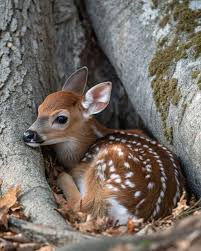
And for animal wildlife, that edge matters just as much. A natural windbreak provides shelter from wind and extreme weather, safer travel corridors, and nesting and cover areas for birds, small mammals, and deer. It also reduces sudden exposure along open edges, helping animals move more naturally through the landscape without disruption.
A Broad Need in Sussex County
Across Sussex County, more than 43,000 acres of woodland have been lost to development in recent decades. In response, the county recently adopted new requirements for perimeter tree buffers in housing developments to help preserve what remains. While these regulations are a step forward, they also highlight a larger issue. Natural tree lines are often removed entirely during construction and then replaced with smaller plantings that take years to reestablish.
This project reflects a different approach. Instead of clearing and replacing, we are working to restore and strengthen natural buffers using native trees already adapted to the land.
Working With Native Regeneration
To restore a natural windbreak and support habitat, we chose to work with what the land was already providing. Across the Preserve, hundreds of young loblolly pine seedlings had naturally taken root, well suited to our soil and climate in Sussex County. The recent snow and ice event in 2026 reinforced this approach. Many non-native evergreens, especially Leland cypress, suffered significant damage, while the native loblolly pines proved far more resilient.
From Seedlings to Structure
Our volunteers carefully uprooted and transplanted about 100 of these young pines to begin reestablishing the windbreak. The goal is to create a more robust windbreak of native loblollies that softens the transition from road to forest while supporting native wildlife. And this approach is not unique to our property. Any time land is cleared, whether for a home or a neighborhood, there is an opportunity to restore natural tree lines using native species like loblolly pine. In many cases, the trees are already there. Young saplings often emerge naturally and can be transplanted early with simple care. It is a practical and cost effective way to rebuild what was lost.

How to Get Involved
At Black Forest Wildlife CoExist Foundation, our focus is coexistence. Human use of land and the needs of the natural environment do not have to compete. They can work together. This project reflects that balance. We will continue to build on this work and share what we learn.
If you, or your homeowner’s association, are interested in restoring a natural tree line, we do have additional loblolly saplings available. We are happy to share them for a donation of your choice to support the work of Black Forest Wildlife CoExist Foundation. Click on the bottom of our home page to contact us: Black Forest Wildlife Preserve


Comments